

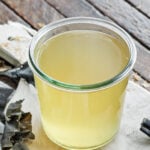

This Dashi Recipe makes a batch of authentic, umami-rich Japanese soup stock with just 3 ingredients. Use it when you’re looking for a deeply comforting base for your homemade miso soup, ramen, and many other Asian-inspired dishes.
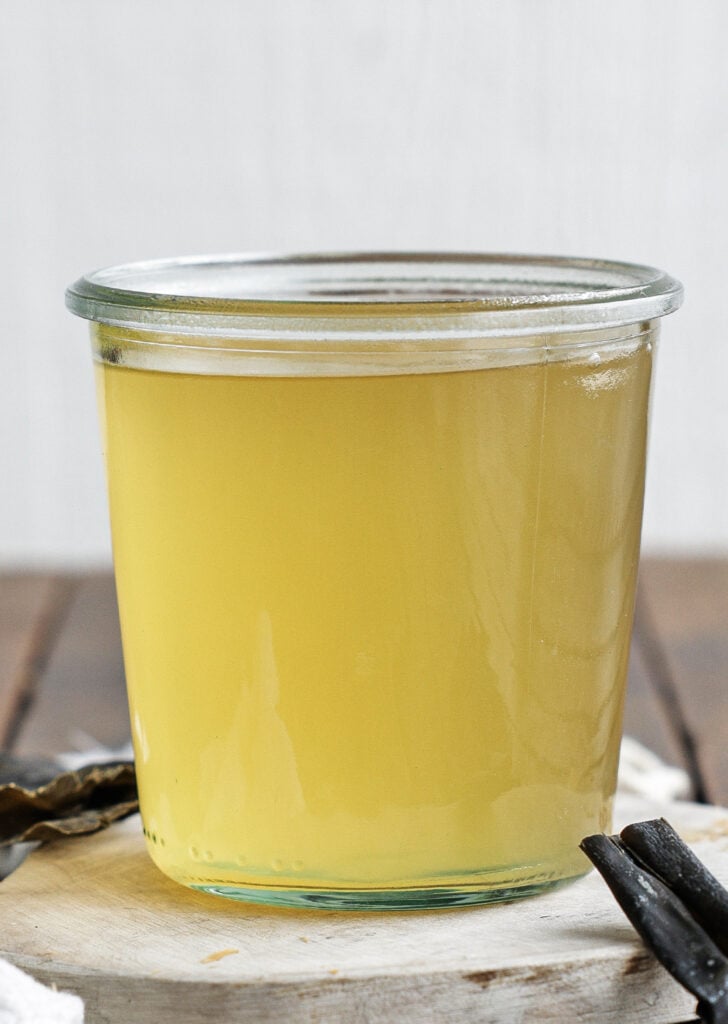
If you’re new to making broth and stock from scratch, you should give my Chicken Stock, Vegetable Stock, and Beef Stock recipes a try. They’re all easy to make and taste way better than what you’d get from a grocery store.
What is Dashi?
Dashi is an umami-rich stock used as the base of countless Japanese dishes. The most common types are:
- Awase dashi: Made from katsuobushi (dried bonito flakes) and konbu (dried kelp).
- Katsuo dashi: Made from katsuobushi alone to give it a smoky, savory flavor.
- Konbu dashi: Made only from konbu for a clean, slightly sweeter, oceanic umami.
- Niboshi dashi: Made from niboshi (small dried sardines or anchovies) for a briny, slightly stronger flavor.
- Shiitake dashi: Made from dried shiitake mushrooms. It’s perfect when you need a vegetarian or vegan option.
My dashi recipe is for awase dashi, the classic kombu and bonito broth. Unlike chicken or veggie stock, dashi is lighter and more delicate, yet incredibly rich in umami. It doesn’t rely on fat or long cooking times to build flavor—the magic comes from the natural glutamates in the kombu and bonito.
Easy to make at home, this versatile Japanese broth is the secret behind miso soup, udon, ramen, and so many other traditional dishes. What’s even better is that it’s ready to use in just 30 minutes and instantly elevates any dish with rich, savory layers that store-bought stock can’t match. Once you start cooking with homemade dashi, you’ll see why Japanese chefs treat it as non-negotiable in their kitchens.
Ingredients and Substitutions
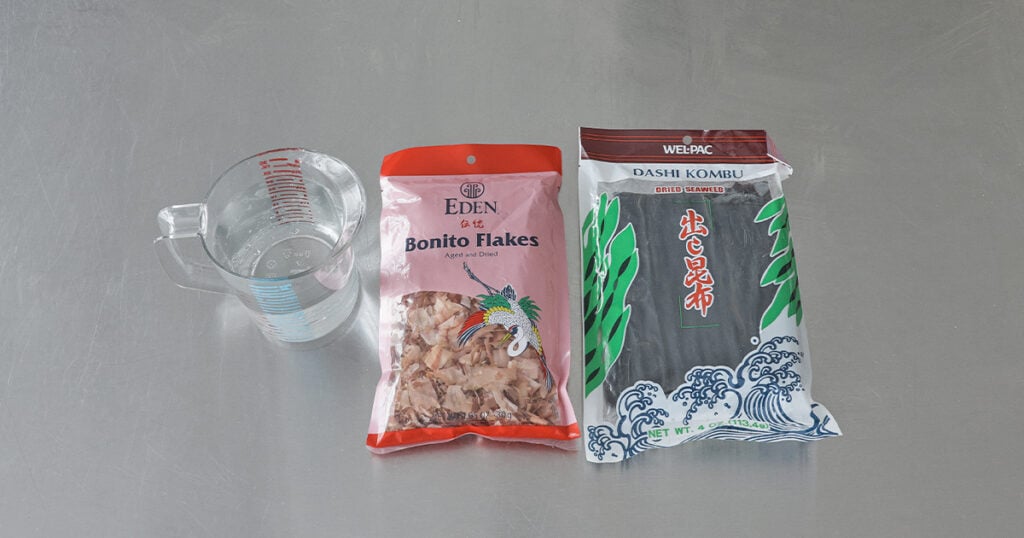
My homemade awase dashi recipe is surprisingly easy to make with only 3 ingredients. Both the kombu and bonito flakes should be easy to find at most Asian grocery stores, Japanese markets, or online.
- Kombu – I recommend looking for kombu that’s thick and slightly white-dusted (that’s natural salt, not mold). To prepare this edible seaweed for the dashi, I gently wipe each piece with a damp cloth to remove any grit. If you can’t find kombu, you can make a lighter dashi called katsuobushi dashi using only bonito flakes and water.
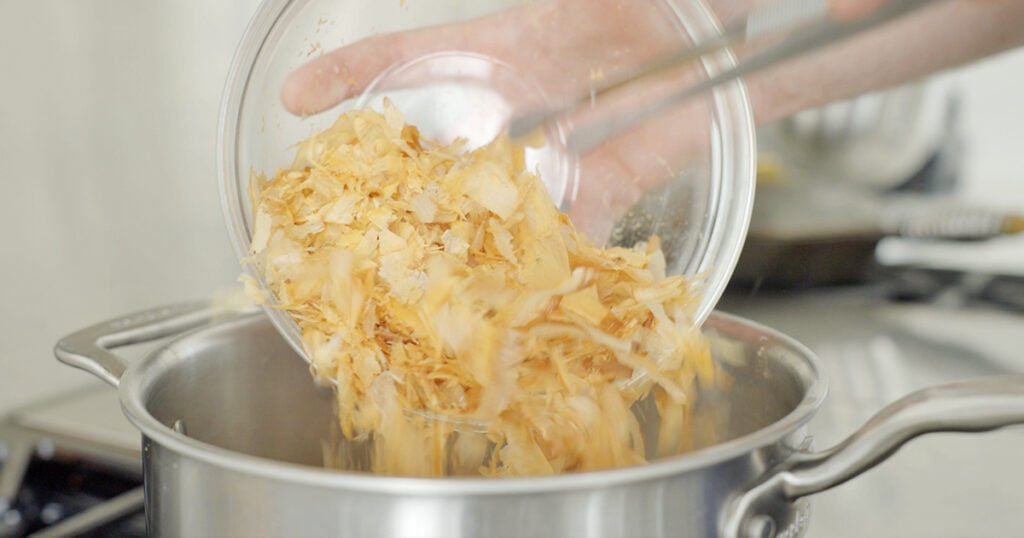
- Bonito Flakes – I use loosely packed bonito flakes (labeled katsuobushi) sold in bags. These thin, smoky shavings of dried, fermented skipjack tuna are what give the stock its rich, savory, almost meaty character.
- Water – I typically use filtered water for the purest flavor.
How to Make Dashi
Steep the kombu: First, I add the kombu and water to a medium-sized pot. I let it gently heat over low to medium heat for about 20 minutes.

Add the bonito: Then, I remove the kombu from the pot and sprinkle in the bonito flakes. I heat the liquid to a gentle boil, then lower the heat and let it simmer for 5 minutes.
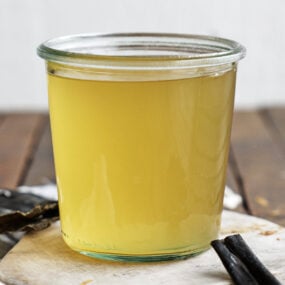
Strain the broth: Finally, I strain the broth through a fine-mesh sieve or cheesecloth. What’s left is a clear, golden dashi that’s ready to use in miso soup and more.


Chef Tip + Notes
The most important tip for making homemade kombu dashi is never to boil the kombu. Simply let it gently heat and steep in the water for about 20 minutes. The goal here is to slowly coax out its umami-rich flavor without letting it boil, which can make the broth cloudy and taste bitter.
- Troubleshooting flavor: If your dashi tastes flat, the kombu may not have steeped long enough, or the bonito flakes may not have simmered fully. On the flip side, if it tastes overly strong or bitter, the kombu likely overheated.
- Reusing ingredients: Don’t toss the kombu after steeping it in the first batch. You can store it in the fridge for later, then reuse it with fresh water and a few more bonito flakes for what’s called niban dashi (second brew). It’s lighter but perfect for simmered dishes where the dashi broth isn’t the main character.
- Vegan variation: You can make a vegan-friendly dashi by substituting bonito flakes with dried shiitake mushrooms. They offer a similar, rich, earthy flavor that’s perfect for vegetarian miso soup, stews, or as a cooking liquid for rice.
Serving Suggestions
Dashi is most commonly used as a base for miso soup, ramen, hot pot (nabemono), and udon. It also appears in many other Japanese classics, such as dressings and sauces (like tentsuyu or tempura dipping sauce), savory custards (chawanmushi), and savory stir-fry-style dishes (nimono).
I make dashi every time I’m craving a comforting bowl of homemade miso soup. If I have extras left over, I’ll use them as a flavor-packed substitute for water when cooking rice or risotto. I’ve even used dashi to deglaze a pan after searing fish or vegetables, leaving a quick and flavorful sauce behind.
Make-Ahead and Storage
Make-Ahead: The strained dashi can be made up to 1 hour before being used in your desired dish. You can keep it warm by straining it into a saucepan set over low heat.
How to Store: The kombu bonito dashi will keep for up to 4 days when it’s stored in an airtight container in the refrigerator.
How to Freeze: This stock also freezes well for about 3 months. I like to freeze the extras in ice cube trays, then transfer the cubes to a freezer bag. This way, I can grab as many stock cubes as I need for my recipes.
More Stock Recipes

Dashi Recipe
Ingredients
- ½ ounce kombu seaweed
- 4 cups loosely packed bonito flakes
- 6 cups water
Instructions
- Add the kombu and water to a medium-sized pot and simmer over low to medium heat for 20 minutes.
- Remove the kombu and add the bonito flakes. Bring to a boil and then simmer over low heat for 5 minutes.
- Strain and serve.
Dashi Recipe